
Introduction
The Kenya Wildlife Service (KWS) has introduced new park entry fees, marking one of the most significant updates for safari visitors in recent years. Whether you’re planning a full safari to Maasai Mara or a short visit to Nairobi National Park, understanding these changes will help you plan better and avoid unexpected costs.
KWS confirmed that the new entry charges for national parks, reserves, and sanctuaries came into force on Wednesday, 1st October 2025, under The Wildlife Conservation and Management (Access, Entry and Conservation Fees) Regulations, 2025, published as Legal Notice No. 160 of 2025. Since this date, all parks managed by KWS, including national parks, national reserves, marine parks, and wildlife sanctuaries, have been operating under the revised fee structure.
It is important to note that county-run and privately managed reserves, such as Maasai Mara National Reserve and Samburu National Reserve, follow independent fee structures. Fees for these destinations may differ from KWS rates, so visitors are advised to confirm current charges with their safari operator or our safari experts before travel.
Why the Change?
The Kenya Wildlife Service explains that the updated park fees are driven by the need for stronger wildlife conservation, better park infrastructure, and long-term sustainability. The previous fee structure had been in place for many years and no longer fully covered the rising costs of managing Kenya’s protected areas. According to KWS, the changes are also intended to strengthen conservation funding, improve visitor experiences, and keep Kenya’s parks competitive in the global tourism market while safeguarding the country’s natural heritage.
Running and protecting national parks involves significant operational costs, including ranger welfare, habitat management, security, and daily park operations. Park fees collected by KWS support wildlife conservation, habitat restoration, and sustainable tourism, with rates varying by park category depending on ecosystem sensitivity and visitor demand.
The increase in park fees is largely due to the rising costs of conservation. Many protected areas face ongoing challenges such as poaching, human-wildlife conflict, and the need for modern surveillance systems. Addressing these issues and maintaining conservation standards requires substantial investment. Every shilling or dollar paid contributes directly to protecting Kenya’s wildlife and wild spaces, funding anti-poaching efforts, community conservation programs, and park maintenance, from Amboseli’s elephants to the flamingos of Lake Nakuru.
KWS describes the 2025 changes as the first major review of conservation and park entry fees since 2007, prompted by a widening KSh 12 billion funding gap and rising operational demands. In the 2024/25 financial year, KWS raised KSh 7.92 billion against a requirement of KSh 19.79 billion. With tourism accounting for around 90% of internal revenue, the revised pricing model aims to increase annual revenue to KSh 16.58 billion by 2028, helping fund conservation, habitat restoration, and human-wildlife conflict mitigation.
How the New Fees Affect Safari Planning
One of the most immediate effects of the revised park fees is an increase in the overall cost of safari tours in Kenya. The revised fees apply only to new bookings made from 1st October 2025 onward, while payments made before the implementation date remain valid and continue to be honored by KWS. Travelers and tour operators planning visits from this date need to factor the new rates into their safari packages.
The updated fees vary by visitor category, including East African citizens, Kenya residents, African citizens, and non-residents. Rates also differ by season, with July through March classified as the high season and April through June as the low season.
Revised KWS Rates for Popular Parks
The rates below highlight the revised conservation fees for some of Kenya’s most popular KWS-managed parks. The applicable charges vary depending on visitor category and age group.
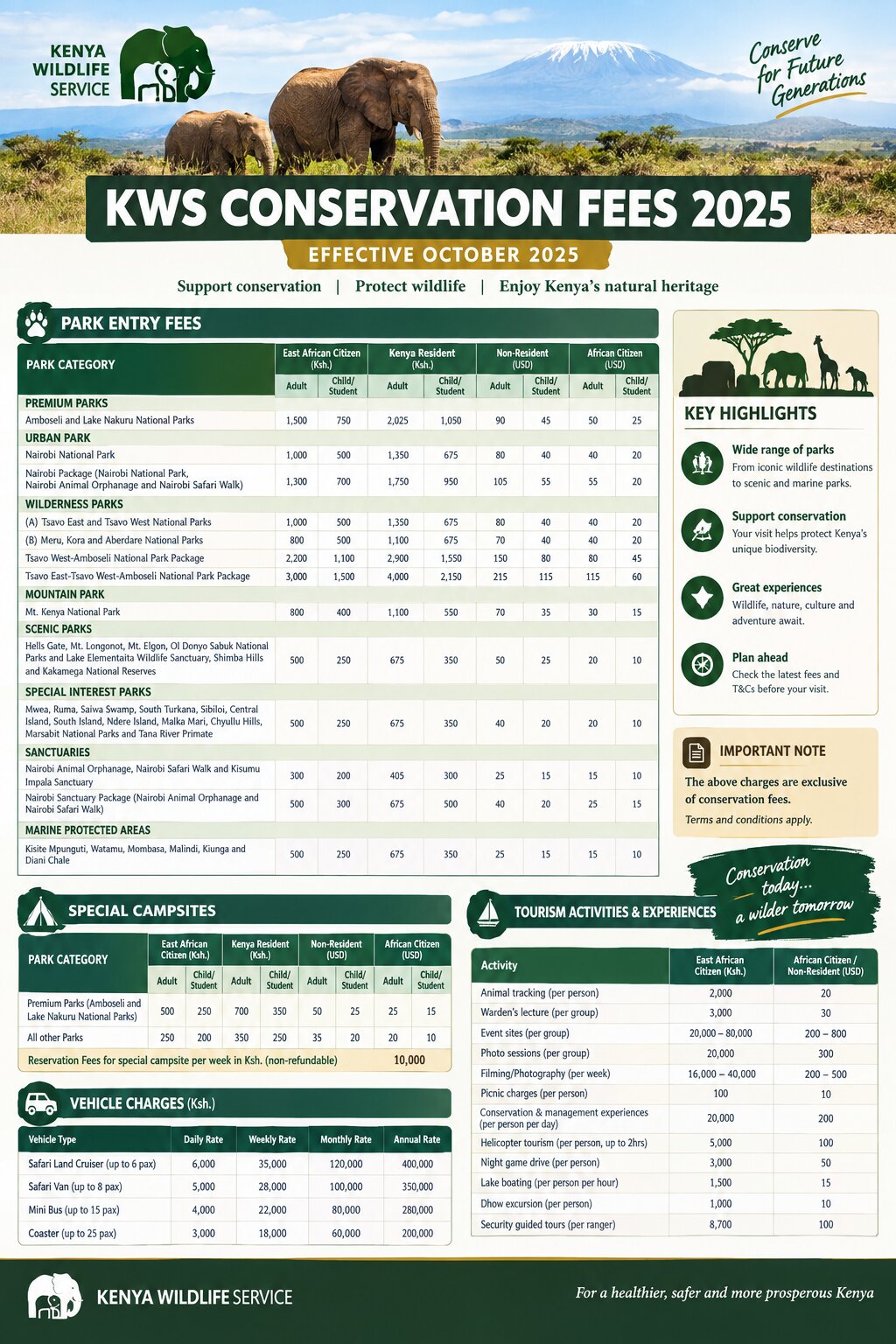
Click the image twice to view the full-size KWS conservation fee schedule
The rates above cover some of Kenya’s most popular KWS-managed destinations. However, KWS oversees many other national parks, marine parks, sanctuaries, and protected areas, each with its own fee structure.
If you are planning to visit destinations not listed above or would like assistance understanding the applicable conservation fees for your itinerary, feel free to contact Giorgi Safaris. Our team will be happy to provide the latest KWS rates and help you plan a safari that suits your interests and budget.
Please note: Park fees are subject to review by the Kenya Wildlife Service (KWS). While we make every effort to keep this guide up to date, visitors are encouraged to confirm current rates before travel. Giorgi Safaris can assist with the latest fee information when planning your safari.
Visitor Exemptions
Certain visitors are exempt from paying KWS conservation fees in major parks, reserves, and conservancies managed by KWS. These exemptions include:
- Persons living with disabilities.
- Children aged 5 years or younger.
- Kenyan citizens aged 70 years and above (senior citizens).
- Licensed tour guides or drivers who are registered and members of a recognized professional association.
By understanding these exemptions in advance, visitors can better plan their budgets and safari itineraries, ensuring a smooth and enjoyable experience across Kenya’s protected areas.
Frequently Asked Questions About KWS Park Fees
1. When did the new KWS park fees take effect?
The revised KWS park fees came into effect on 1st October 2025 under The Wildlife Conservation and Management (Access, Entry and Conservation Fees) Regulations, 2025.
2. Do the new fees apply to existing bookings?
No. According to KWS, the revised fees apply only to new bookings made from 1st October 2025 onward. Payments made before the implementation date remain valid and continue to be honored.
3. Are Maasai Mara and Samburu National Reserves managed by KWS?
No. Maasai Mara National Reserve and Samburu National Reserve are not managed by KWS. They operate under separate management authorities and have their own independent fee structures. Visitors should confirm the applicable rates before travel.
4. Do KWS park fees vary depending on the season?
Yes. KWS applies seasonal pricing in certain parks. July through March is classified as the high season, while April through June is considered the low season. Visitors should confirm the applicable rates when planning their safari.
5. Where can I confirm the latest KWS park fees?
Visitors can check the latest conservation fees through official KWS communication channels or contact Giorgi Safaris for guidance when planning their safari itinerary. Since park fees may be revised from time to time, confirming current rates before travel is always advisable.
Conclusion
The introduction of revised KWS park fees represents a significant shift in how visitors plan and budget for safaris in Kenya. While the changes may affect safari costs and travel planning, they are intended to strengthen conservation efforts, improve visitor experiences, and support the long-term sustainability of Kenya’s wildlife heritage.
By understanding the updated rates, exemptions, and visitor categories in advance, travelers can avoid unnecessary surprises and focus on what truly matters: experiencing Kenya’s extraordinary landscapes and wildlife.
Whether you are planning your first safari or returning to explore another corner of the country, staying informed will help ensure a smooth and rewarding adventure.
Planning a safari in Kenya?
If you need help understanding how the revised KWS fees affect your itinerary or would like assistance planning your trip, the team at Giorgi Safaris is here to help. We can advise you on current park fees, recommend the best destinations for your budget, and design a tailor-made safari experience that matches your interests.
Contact Giorgi Safaris today to start planning your Kenyan safari.
Last updated: 13 June 2026
This article has been reviewed and updated to reflect the latest information available regarding KWS park fees. Although every effort is made to ensure accuracy, park fees and related regulations remain subject to change by the Kenya Wildlife Service (KWS). Visitors are encouraged to confirm current rates before travel or contact Giorgi Safaris for the latest guidance.